*As an Amazon Associate I may earn from qualifying purchases. This post may contain affiliate links, which means I may receive a small commission, at no cost to you, if you make a purchase through a link*
Cloth diapering a newborn baby is not the same as cloth diapering a 6 month old baby.
Click to get a free cloth diaper stash checklist printable
There are more things to consider other than just “time to change the diaper” when you have a newborn.
When you are post-partum, overwhelmed, and exhausted from labor and delivery, the very idea of cloth diapering a newborn baby may sound like way too much on you.
But I am here to tell you, after cloth diapering 3 of my baby’s at birth, it was actually a lot easier and 100% better to use cloth diapers than disposables.
After my personal experience, as well as working with other moms who have returned time and time again with each pregnancy to my cloth diaper company, that the tips I have are valuable and important to share with my audience of moms and parents.
For one, you’ll get excited that every time your baby poops, you aren’t throwing your dollar bills in the garbage! And let’s say that’s about 19-ish times in one day 🙂
I really wish I had known these important tips that I am sharing with you when I first began using cloth diapers.
I have covered ALL the basics of cloth diapering a newborn here so that you are 100% informed. It is very important to me that I educate you with what you need to know before your baby arrives if you are choosing to cloth diaper.
14 Tips For Cloth Diapering a Newborn
Tip 1: In the hospital
If you are having a hospital birth, you’ll need to make the decision of whether or not you want to cloth diaper immediately after delivery and during your stay in the hospital, or if you want to wait until you get home and settled in and unpacked.
You may even decide that you need to wait to get into a good groove before you begin pulling out the fluff.
There is no correct choice. Don’t be ashamed of any choice you make about cloth diapering. The only decision that will work, is the one you decided that will work best.
Personally, i decided to bring a stack of cloth diapers to the hospital and to use them immediately after birth throughout the entire stay only with my 4th baby.
If you choose to do the same, make sure to let your baby’s nurses know that you prefer not to use disposable diapers and that you brought diapers for your baby.
If you want to use your own diapers during the hospital stay, I suggest you bring at least enough for one night and 2 days at the minimum (possibly 10-12 diapers each day you will be there). You don’t want to forget your zippered wetbag to store the soiled diapers in while you are there. When you get home you can just dump them in to wash.
Of course the hospital will provide you with a package of disposable diapers if you simply want to wait until you get home to get started. And there is absolutely nothing wrong with that. Every situation is different and you should do what works best for you and your baby.
You can even do some cloth and some hospital disposables during the stay.
Whatever you decide, try to make that decision in time (at least 2 months before delivery) to start gathering your stash before baby arrives so you can pack your bags for the hospital.
Tip 2: How many newborn cloth diapers
Newborn babies poop and pee ALL-FRIGGIN-DAY-LONG.
You will probably change your baby’s diaper every 30 minutes to a max of 2 hours those first few weeks.
You will need at THE VERY least 12-18 newborn diapers for each day that you are not washing them. If you only want to wash diapers every other day, I suggest 24 to 36 total diapers (of any sort or kind) for those first 12 weeks.
Tip 3: Types and styles of newborn cloth diapers
There are only 6 main types of cloth diapers. And ONE of those, is the swim diaper. So don’t let the idea of all the different cloth diapers overwhelm you too much.
Cloth Diaper Types:
1. Pockets/AI2
2. Covers/Wraps/Shells
3. Flats and Prefolds
4. Fitteds
5. All In One’s/Hybrids
6. Swim Diapers

*This is not my infographic, photo credit to the Fluffy Penguin Company
The best options to cloth diaper newborn babies are going to be fitteds and prefolds/flats.
Both of these diapers will provide a customized fit to even the smallest baby, with the most absorbency.
Prefolds can be used not only for diapering but for burp rags, spit-up, baby gear protection, etc. They come in many different sizes and can be reused for a long period of time. You can choose to use a cover or not with prefolds.
Here are some examples SoCo’s prefolds. This is an example of wearing a prefold around the house during those long exhausting days or those explosive days. There are many different ways to fold a prefold, and no way is perfect. They are all correct. Prefolds require either a snappi or diaper pins to hold the diaper together and on the baby. These are really easy to use and come in baby-proof styles.
Fitteds are true “do what they say they do” diapers. They go on and fit just like a disposable, but work 100x better.
With fitteds, you can get an easy, all natural, great feeling of protection on your baby. And they come in teeny tiny sizes made to mold to your baby.
Related: Fitted Cloth Diapers Explained
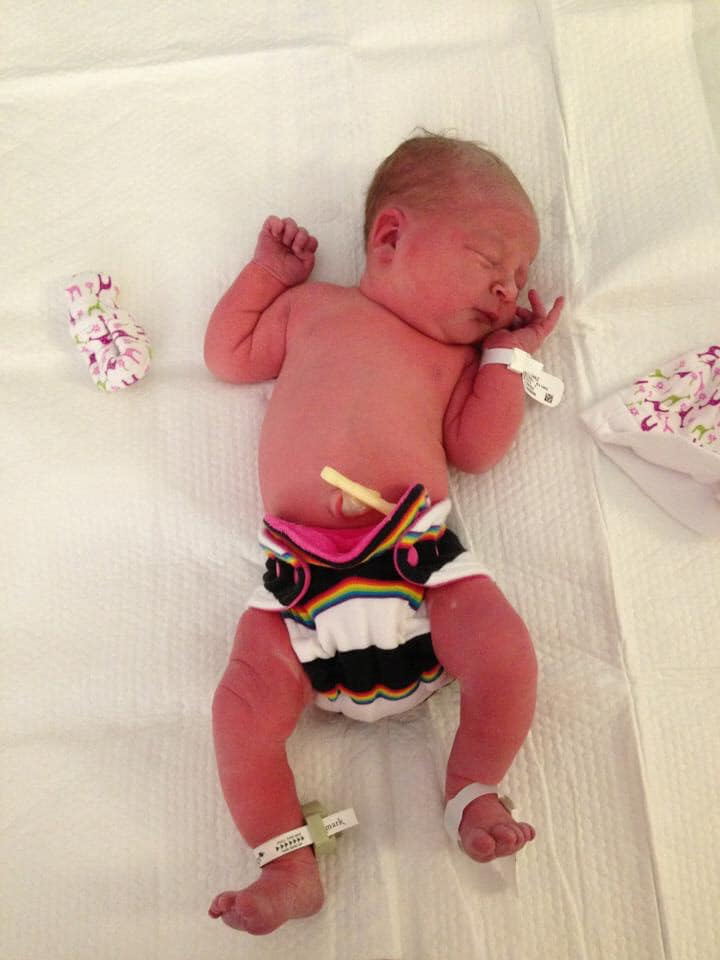
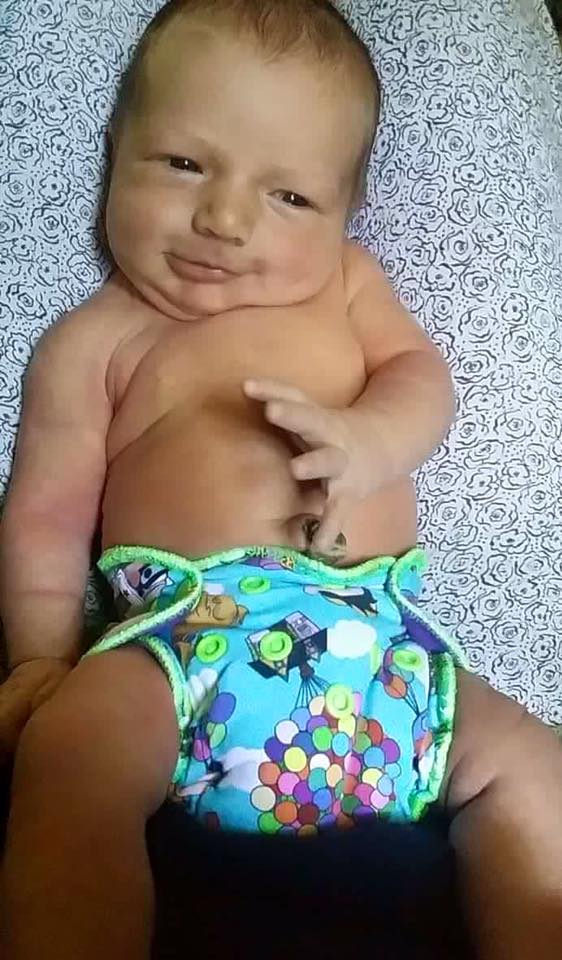
Here is an example of a Southern Comfort Fitted (soco) Just Born (our newborn diaper name) so that you can see how they would fit a newborn baby.

SoCo Just Born Cloth diaper SoCo Just Born Cloth Diaper
Tip 4: One Size v. Newborn Size
“One-size-diapers” does not necessarily mean it will fit any size baby at any stage.
Generally speaking, you can adjust the sizing of the “one-size-diaper” diaper to get the best fit within a very wide range of weight, usually from 10-30lbs.
However, one size diapers are definitely not suitable for most newborn babies.
Most one-size diapers do not really start fitting well until around a good solid 10 pounds, and still will be a little baggy. The average newborn baby weighs 8lbs.
You are going to need a good fitting diaper if your baby is anywhere from 5-12 pounds, otherwise, you will get belly and leg gaping which causes leaks.
Just Born Fitteds from SoCo actually start fitting at 5lbs, designed to be worn directly after birth, and proceed to fit up to 12lbs (around 10-12 weeks old).
My last baby was 11lbs at birth!
Trust me I just imagined the face you just made… and he fit into SoCo Just Borns like a glove for about a month. The thing is, I needed a diaper to fit him during that month. Even though they only lasted about a month, that diaper was the only best fitting diaper that I could use during that month. And if he were born smaller, he would have fit much longer.
But the fact of the matter is, we absolutely must find a diaper that fits during those first 12 weeks. Even if those diapers can’t be used after baby has to outgrow them.
Don’t worry, if you don’t want to deal with the hassle of buying and selling those newborn diapers, I have an awesome solution for that below.
SoCo Just Borns adhere to any umbilical cord rise, thigh length, and waist so that you do not have to worry about gaping leg holes or blowouts.
Going with a good set of newborn-sized fitted diapers, lots of newborn-sized prefolds, flats and covers, is going to be your very best stash for those first 12 weeks at home.
Tip 5: Meconium
The oh so dreaded, black-ish, tar like goo from that first bowl movement, is called Meconium.
This is absolutely nothing to be afraid of when it comes to cloth diapering.
Meconium is expected, so we know to prepare for it. It can most definitely wash out and won’t leave stains after several washes, especially if you use some good ol’ BioKleen Bac-Out. More on the miracle spray Bac-Out below.
Here is what I did. I bought a roll of flushable, bamboo, eco-friendly liners. They are paper-thin and lay so lightly and evenly inside any diaper. Once that meconium came through, I walked the diaper to the toilet, grabbed the corner of the liner, peeled it off, and plopped in right in the toilet. Down the porcelain express it went.
Tip 6: Breastmilk Poo
If you are exclusively breastfeeding your baby, you are most definitely making your cloth diaper journey even easier!
Here is the plus side, breastmilk poo does NOT have to be rinsed or flushed out of a cloth diaper. Breastmilk is 100% water-soluble and your washing machine will rinse and wash that stuff away like its nothing.
Now let’s talk about blowouts…
Newborn babies explode. We all know it. It happens no matter what. Especially when breastfeeding.
And when that happens, it gets EVERYWHERE. All over the baby head to toe, all over YOU head to toe, all over the place you were sitting or standing, the diaper bag, the clothes.
Everything.
Don’t panic. Expect these. This “blow out” is simply one of the humurous parts of newborn babies. You just have to laugh this off. There is no reason to get mad, or frustrated. You just do what you gotta do. Go get cleaned up. Put on a fresh new diaper, and start over. HEHE. Facts.
This is simply NOT the fault of any diaper style you chose. This is a fact of life that it would have happened if your baby was wearing duct tape. It’s going to come out of the diaper and clothing. There is no way to prevent these with any diaper type. So just go with it 😉
Tip 7: Umbilical Cord
The umbilical cord tip on your baby may not even make it home from the hospital.
But say it does and it’s one of those that never seem to be getting closer to falling off. It’s been 2 weeks and it’s still there.
We have a diaper for that.
SoCo Just Borns. The umbilical snap down has 2 rise options. Every baby is made differently, some baby’s rises might be shorter or longer than others.
Having a good diaper that snaps down out of the way from an irritating rub on baby will make all the difference in the world for baby’s comfort.
Once the cord falls off, you are free to cover it up with any fitting diaper and stop worrying about it.
Tip 8: Extra liners and inserts
Stock up on flushable-eco-friendly liners, fleece-re-usable-liners, and extra bamboo/hemp inserts.
You’ll thank me later and be glad you did.
You might be having one of those days that you need extra absorbency or need some extra liners on those poopy doopy days.
Flushable liners are a lifesaver.
For example, if you are out in public, have baby in a cloth diaper, and it’s time to change, you most definitely want to be able to flush most of that down the toilet to relieve you from carrying that around for the rest of the evening, even if it’s in a wet bag.
Liners are also stain savers. They can protect your diaper from poo stains if you are in the mood for salvaging the inside of your diapers.
Sunning also does the trick of getting stains out. Sunning diapers is like an all-natural bleach for whitening the inside of diapers.
Tip 9: Budget
When you need 36 cloth diapers for 2 days of cloth diapering a new born, that amount of diapers might be hard to attain at first.
The cost of cloth diapers is upfront. And because you are paying upfront, it seems expensive. But remember, in the end, you are paying way less than you ever would if you chose disposables.
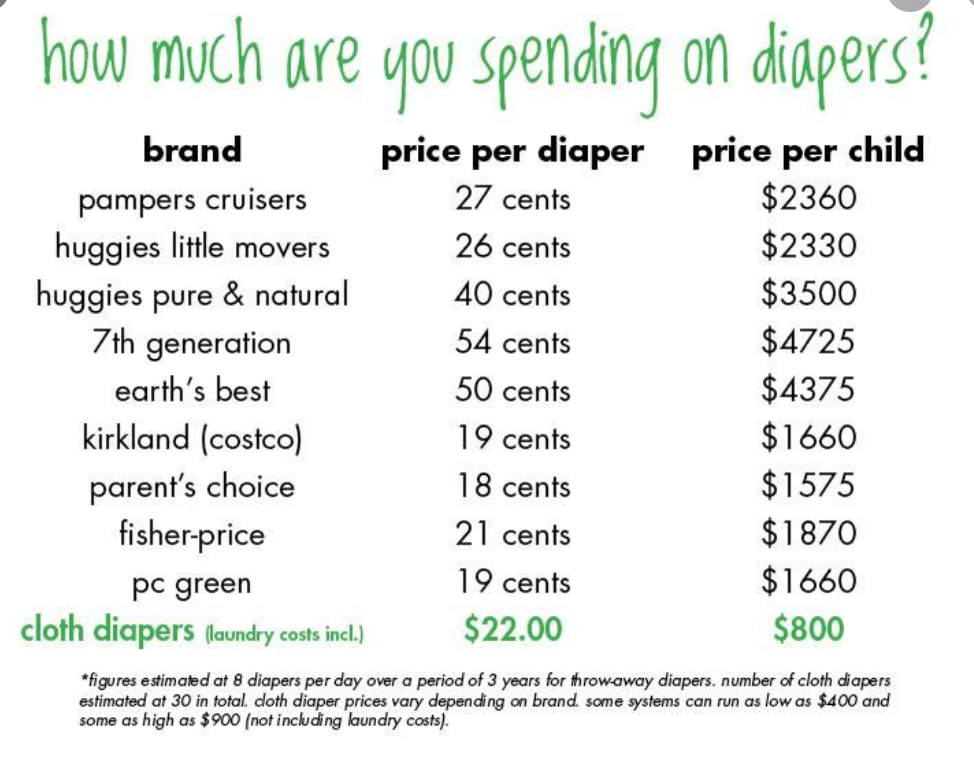
Remember earlier when I said I have solutions for easily attaining your newborn stash without the hassle and with a smaller budget? Here it is —–>
-buy one nice cloth diaper that you have been drooling over and treat yourself every payday to stock up on them during your pregnancy
-Order these prefolds and flats on amazon that come in large counts (a 6 pack for $10 bucks!)
-Ask a friend to borrow their newborn stash in exchange for something. Explain that diapers will be used with love and care and for their purpose. Return them with a loving gift.
–Find a New Born Cloth Diaper Rental company. There are tons of these! This one offers the entire stash you need plus add ons such as cloth wipes, wet bag, and more. Not to mention, your deposit is REFUNDABLE! A rental program is probably the absolute very best option for cloth diapering a newborn. Here are a few more good ones to browse:
– Jillian’s Drawers
– The Green Tot Spot
– My Sweet Pickles
– Happy Baby Company (cloth diaper your baby for $1-2 a day!)
– Did you previously have a baby? If so, hopefully, if you saved those diapers, you can reuse your other’s baby’s cloth diaper stash. And you don’t even have to pay for these because you already have them. Win-Win!
– You can also shop for used cloth diapers. There are tons of Buy Sell Trade Groups on Facebook that you can shop for used cloth diapers. I definitely suggest starting out looking in the SoCo BST group for Soco fitteds.
– Also, your diapers have a resale value. So when you are done cloth diapering in the newborn stage, list your diapers for sale to get some of your return on your investment back! Another win-win! You got your good use out of them and got 50% of the cost back. I wish I could wear a shirt to death and then just take it back when I was done with it for a partial refund…
Tip 10: Prepping before use
You’ll want to make sure all of your diapers are super clean before you put them on your newborn baby.
Newborn skin is very sensitive and you don’t want any germs or manufacturing dust from new diapers rubbing onto your baby.
The more you wash your natural diapers, the more absorbent they become.
For prefolds and fitteds I suggest you wash and dry them 2 cycles. As well as for used or borrowed diapers. Go ahead and wash every single diaper you are going to need for at least 3 days before baby arrives.
Have all of your diapers in all the areas you need to be able to reach for and as convenient as possible.
Add a stash at the diaper changing station, a stash at the cradle, a stash at the play pin, and a stash in the diaper bag for sure. That’s at least 4 places to start with.
Tip 11: Cloth Wipes
Cloth wipes are a no brainer! You have already made the decision to use cloth diapers, consider washing cloth wipes with them.
There is find comfort in knowing that you are not using any unknown chemicals on your baby from store-bought wipes.
You can save so much money without having to buy them and they are reusable over and over again.
Here is the post all about cloth wipes and how you can make your own wipes and all-natural wipe solution.
You can also pick up a pack of quality, bamboo velour, large wipes that will last a lifetime HERE in my shop. Plus you would be supporting small business and a fellow mom 🙂
Choose the cloth wipes. Just Do it. It’s easy. Simple. Come on…
Tip 12: Overnight
You are going to get up to feed your newborn baby every couple of hours so it is best to change the diaper as soon as you pick your baby up before the feeding.
You will want to make sure you have plenty of diapers at the diaper changing station for those groggy nights, with plenty of wipes ready to use.
There are plenty of good options to add some extra protection for when your baby wants to sleep 4 or more hours:
– wool covers coated in lanolin
-PUL covers
-extra bamboo inserts
Fitteds with a wool cover is the ultimate overnight option.

If you are good at knitting you can even make your own wool yarn covers. Check out the tutorials on Pinterest.
Tip 13: Washing and stains
I have a complete guide on washing cloth diapers HERE.
You’ll want to research the best cloth diaper detergent that works for your baby. Stay away from harsh chemicals and perfumes.
THIS detergent is the only detergent I recommend to my customers for washing any type of cloth diaper for any baby.
Remember that breastmilk poo is 100% water soluble and all natural. You do not need to do anything extra to those diapers other than throw them in the wash.
Once a week I suggest hanging your diapers in the sun to give them a natural bleach. This will wash out any stains very nicely.
Now, back to Bac-Out. This made-for-moms-who-cloth-diaper-spray is my go-to, all-natural stain remover. It doesn’t have any harsh chemicals, it’s plant-based and kills germs and bacteria while removing the stains. An essential accessory for your cloth diaper stash. Bac-Out is inexpensive and one bottle lasts a very long time. You can grab your bottle HERE.
You will need to wash newborn cloth diapers no less than every other day. Since newborns will go through 12-18 diapers a day, you don’t want more than 36 of your diapers just hanging out to be washed. So put your wash routine on a schedule.
Tip 14: Newborn baby diaper rash
Newborn skin is super sensitive. I can’t say this enough.
Newborn poo can have an acidic base to it which can cause redness or irritation on the skin between the legs and on the bum. Especially if it’s been sitting for more than 15 minutes on your baby’s skin.
So when that does happen, you want to be prepared. Have your diaper rash products ready to use. But you need a cloth diaper safe rash cream. Not just any rash cream is safe for your baby or cloth diapers. Stay away from pastes and harsh chemicals.
The #1 best, all-natural solution is, of course, your own breastmilk. It contains antibodies that do this magical work on the skin of the baby it’s feeding. It’s truly a miracle! Pump or squeeze just a little bit out and rub it gently on your baby’s rash. You can even keep some stored that is just for diaper rash in the freezer. Microwave it to defrost it and get it lukewarm. Then apply.
My next recommendation is the brand I stand by, CJs Butter.
I do not endorse anything with harsh chemicals or ingredients that I have never heard of or products that I have not tried and trust myself.
CJs Butter is NOTHING but all natural. They offer different forms of their product in sprays, balms, lotions and more. Not to mention, the scents are so super unique and smell amazing. They offer products that can be used for the entire family, even dad.
CJ’s Butter is safe for cloth diapers. 100% all-natural and made for the entire family for many different issues:
- Eczema
- Dry, Cracked Feet
- Alligator Elbows
- Psoriasis
- Bug Bites
- Incontinence Protection
- Rosacea
- Cold Sores
- Hemorrhoids
- Dry Skin
- Hair Conditioning Treatment
- Post-Surgical Care
- Chapped Skin
- Sunburn Pain/Peeling
- Itchy Pregnant Tummies
- Mechanic’s Hands
- Allergy Rash
- Severe Diaper Rash
- Hang Nails
- Itchiness
- Cradle Cap
- Cuticles
- Wind Burn (prevention & soothing)
- Stretch Marks
- Wrinkles
- Split Ends
- Lacerations
- Growing Pains
- Scars
- Abrasions
- Crawler’s Knees
- And MORE!!!
Here is a list of the ingredients used:
Organic Butyrospermum Parkii (Shea) Butter, Cocos Nucifera (Coconut) Oil, Olea Europaea Fruit (Olive) Oil, Theobroma Cacao Seed (Cocoa) Butter (Cocoa Butter, Citric Acid), Cera Alba (Beeswax), Lanolin Oil, Tocopherol** (Vitamin E) , Colloidal Oatmeal. **Derived from soy
Nice huh? I have an entire selection available of CJ’s Butter right here for you.
Go Easy and Keep It Simple
Give yourself grace. Make it simple. If you feel you can’t do cloth diapers full time, try just part-time.
Or use disposables for overnight.
No one mom is going to cloth diaper their baby the exact same way as another mom. No one is going to judge you for the way you choose to diaper your baby.
Maybe you decide to wait until the newborn stage is over with before you start with cloth diapers.
Do what works best for you and your family.
Most importantly, don’t feel guilty, don’t beat yourself up. Just enjoy and be as present as possible during these first precious weeks with your brand new baby. And remember, mom guilt is bullshit! You are doing your best.
Be sure to save this article for later so you can come back to it when you need it again. Click the image below and pin it to pinterest! Let me know in the comments if there are any concerns you have about cloth diapering your brand new baby.


