
*As an Amazon Associate I may earn from qualifying purchases. This post may contain affiliate links, which means I may receive a small commission, at no cost to you, if you make a purchase through a link*
I actually never used cloth pads until just a few years ago after I had my 4th baby. I didn’t even know they were an option, to be honest. But being in the cloth diaper community, I eventually caught wind of cloth pads, and I noticed how hot of an item they were and how quickly they went out of stock. I mean, I reuse my underwear, my clothes, my toothbrush, etc.
Why is it such a revolutionary idea to reuse my pads? And besides being more economical, they were cute! I was definitely intrigued. And the comments and reviews spoke for themselves. I learned that so many women were ditching the tampons and pads and going straight for cloth pads.
So needless to say, I decided I had nothing to lose, and I went for it!
Making the switch to cloth pads
I have not regretted switching to cloth pads or looked back since. I should also add in the fact that I also began using a menstrual cup at the same time.
I found that pairing the cloth pad with the cup worked really well (more on that later!). And while being a work at home mom with the convenience of my own bathroom does help, these products don’t have to be limited to stay at home moms, especially after you get the hang of it!
If you have painfully long and heavy periods, then you will definitely be hitting the jackpot when making the switch! I realize that “jackpot” and “period” aren’t usually two words used in the same sentence, but if we are going to deal with this monthly curse, we might as well find as many ways as possible to make it more bearable, right? Can I get an amen??
My periods are horrible in every way possible, and ever since changing to cloth pads, I have noticed a huge difference in my overall comfort level, my wallet, and even my cramping!
Let’s pause for a minute because I know what some of you are thinking. “Ewww! I might get blood on my hands!” or “I’m supposed to put those in my washing machine? That’s gross!” And while your concerns are valid, I think I can put your mind at ease if you keep reading with an open mind.
So today, I am covering every concern and question you may have. How to find the right pads for you, how to use them, store them, wash them and more because not only have I made the transition to cloth pads myself, I am making them in my very own studio for YOU to try.
Do cloth pads leak?
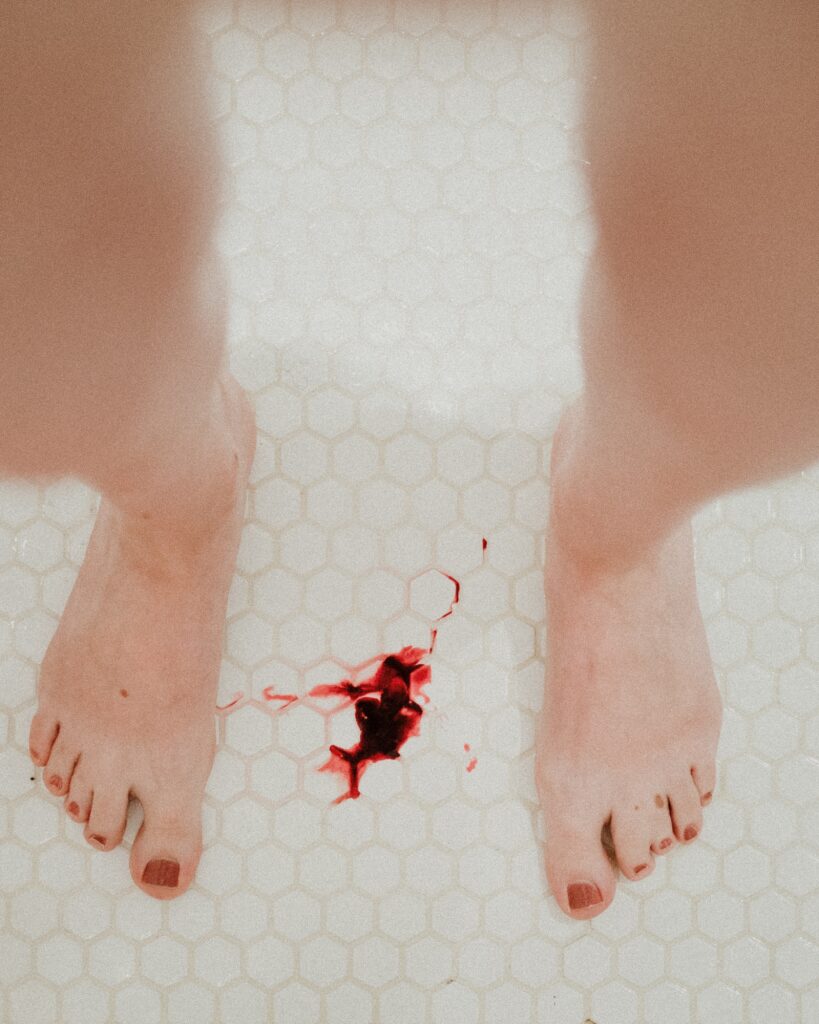
One of the very first questions I get asked when it comes to cloth pads is, “Do they leak?”
That was also a concern of mine because I initially perceived them to be a small piece of cloth that wouldn’t lay flat or stay in one spot.
But lemme tell ya, CLOTH PADS DON’T LEAK! And from my personal experience, they actually hold up even better than disposable pads.
Because cloth pads are made with absorbent fabrics and backed with liquid resistant fabrics, they actually absorb and retain liquid very nicely. And because of the way the pads are sewn, they actually stay put with no twisting or moving, even at night while tossing and turning in bed.
Also, don’t you hate those sticky tabs on disposable pads? Not only do they cause discomfort, but they cause more leakage when they get stuck or twisted the wrong way. I can’t tell you how many pairs of underwear I have ruined!
SoCo cloth pads are designed with the absorbent layer exposed on top of the pad, and it creates a sort of “boat” for catching and protecting you from your flow. Bottom line is, LESS MESS.
How much liquid does one cloth pad hold?
Cloth pads are essentially made out of natural, organic cottons and bamboos. They are designed to hold just as much as, if not more, liquid than the average tampon or disposable pad.
On average, a woman will bleed 6-8 teaspoons of blood per day throughout her cycle. A menstrual cup can hold up to 6 teaspoons, and a cloth pad is designed to hold about the same amount.
We tested a cloth pad with water using a 1/2 tablespoon. Before a cloth pad is completely soaked, it can hold 4 table spoons and still remain dry on the backside. I recommend changing your pad when you feel you need to change it.
It really just comes down to comfort and how long you want to be in a wet pad or whether or not you are pairing the pad with a tampon or menstrual cup or solely using a cloth pad.
Keep in mind that doing a water test isn’t reliable. Water is thinner than blood and spreads out and seeps through much more than blood does.
Will cloth pads really save me money? How much will they cost up front?
Many of our decisions come down to money, right? So let’s talk cost. I know it sounds crazy to even consider spending more than a few bucks on a pad, but hear me out…
First of all, cloth pads are designed and created by small businesses which are most often run by hard working moms trying to support their families (I speak from experience!).
All of the work that goes into making just one pad is often forgotten. The purchasing and cutting of the materials, the sewing, the pictures that need to be taken, the advertising, marketing, etc. You are paying her for her hard work, and she is worth every penny.
Second, consider what you are getting in return for helping out the small business owner: a quality, handmade product you can use repeatedly for a lifetime. Talk about a win-win situation!
Now let’s talk about cost comparison…
Let’s say you buy 10 cloth pads. You’d be spending $100, but you’d be all set. But say you get a box of 20 pads for $6 at the store once a month for a year. Multiply that number times the number of years you will have your period. We are talking thousands of dollars over the course of your lifetime! It’s a savings that you won’t see upfront, but it adds up over time. I didn’t even factor in the cost of tampons for all of you who buy both! Anyway, you get my point: cloth pads pay off.
Check out this cloth pad/disposable pad calculator to see just how much you could potentially save for your period.
How do I use, store, and wash cloth pads?
Using Cloth Pads
Using cloth pads is super simple. Use them just as you would use a regular, disposable pad. Lay it in your underwear and snap it underneath and then change the pad when you feel necessary! There is no real right or wrong way to use them. On the go? No problem! Consider buying one of my pockets that you can tuck your used pad in that won’t leave any mess.
Storing Used or Clean Cloth Pads
For storing your clean, cloth pads that are ready to use, my personal preference is to keep them nice and tidy inside a plastic container with a lid.
This way, I can put the box away at the top of my bathroom closet when I am done with my period.
They are protected and out of sight. Then when Aunt Flo comes calling, you can get the box down and set it next to the toilet for your convenience.
For storing used pads, I immediately remove them from my underwear. If it’s pretty soiled, I will rinse it off with warm water in the sink or bathtub. If it isn’t too soiled, I will just fold it up into the square it folds into and snap it closed. No blood can be seen or felt once folded.
I keep a wet bag next to the toilet, and I toss them in there until it’s time to wash. For all of you cloth diaper mommas, you know the process!
How do I wash cloth pads?
At the end of my period, I take my zippered wet bag and toss them all at once in the washing machine and then throw my wet bag in as well. I wash the pads by themselves. I do a hot rinse and a normal wash, and I use Tide detergent.
They come out nice and clean. If I feel that a certain pad might need it, I spray some OxiClean on it beforehand. Obviously, the longer you wait to wash them, the more likely they are to stain, but I have had perfect luck because of rinsing them right after using them.
After washing them, I then throw them in the dryer and tumble dry on high. I like to take them and store them nice and neat in my container so they are ready to grab and use on my next cycle.
I should also add in that the period acidity can and will eventually make the fabric fade. Good thing nobody except you sees them anyway, right?
Are cloth pads comfortable or are they bulky?
I bet you are wondering if they are bulky. We all remember making that embarrassing walk to the school clinic where the nurse handed you a pad as thick as a mattress.
Cloth pads look like they would be bulky, but they actually have the same consistency as a good quality disposable pad.
Obviously if you are wearing tight leggings, you will be able to see it but same goes for disposable pads. They feel trim, secure, and comfortable without being too noticeable. It’s like another layer in your underwear!
On a hot summer day, a disposable pad gets sticky. The tabs start rubbing on your skin as you get sweaty. All you can think about is getting home to take a shower! Cloth pads are entirely different. The soft fabric is sure to hold up and offer more comfort than any other disposable pad.
But how do I use cloth pads if I am in public or at school?
This is another question that I am frequently asked. Can cloth pads be used while at school, work, etc?
The answer is that of course they can! Honestly, it all depends on how committed you are to using 100% reusable products.
But how? It’s really as simple as folding them up and putting them in your zippered mini wetbag or a pad pocket that many seamstresses sell with their pads, and then you just put it in your purse. I sell pockets in my store, and they are designed to fit any size cloth pad. They are made from cotton and liquid resistant fleece so that they will stay dry on the outside while carrying around. I wash them the same way I wash my pads.
Obviously, I do not recommend rinsing them in a public sink. If you use a menstrual cup in public, you probably do what I do and use toilet paper to wipe it off. I suggest you keep some wet wipes in your purse if you’re worried about a mess.
One real perk of using cloth pads in public is that you don’t have to worry about there being a trash can in your stall or other people hearing you peel open your disposable pad wrapper. This is especially good for teenagers as they adjust to having their periods.
But with all of that said, many people choose to stick with disposable pads when they go out in public. But if you’re committed to making it work, it’s more than doable.
Do They Smell?
In my personal experience, my cloth pads have never had a smell. It is possible that this could be different for others, but the general consensus is that cloth pads smell less than disposable because the fabric is more absorbent.
Can I use cloth pads if I am a swimmer?
Unfortunately, no. Cloth pads are not meant for swimming. Just like disposable pads, cloth pads will fill up with water right away. I suggest using a menstrual cup or period protection fabric.
What if my period is worse than Niagra Falls, will cloth pads still work for me?
You will be surprised at how well cloth pads contain and hold up to even the heaviest flows. I seriously just urge you to try so you know for yourself! They could very well be the answer to your period prayers.
Once again, this all comes down to trial and error. It is your personal choice to pair your cloth pad with a menstrual cup or tampons depending on your body, flow, and preferences.
Keep some disposable pads on hand if you are at all worried, but I am betting that you will find that cloth pads will suit even the heaviest of flows.
Check my store for all of the options that may be available to you if you feel you have a heavier than average flow HERE.
Also, my advice is to size up when purchasing your pads if your flow is super heavy.
I feel for those of you women who have PCOS or other issues that cause you to bleed more than others. I hope that converting to cloth pads really helps.
What kind of fabrics are used in cloth pads?
Let’s talk fabric! Different seamstresses use different fabrics, but the main combinations go something like this:
Outer:
- 100% cotton woven
- 100% polyester minky
- 100% cotton velour
- 95/5% cotton lycra
- Poly/Cotton
- Organic Bamboo Velour
Hidden layer:
- Absorbent layer of:
- Cotton flannel
- Bamboo
- Cotton terry
- Hemp terry
- Zorb
Back layer:
- Liquid resistant layer of:
- Windpro
- Polyester Fleece
- PUL
- <insert ad>
The purpose of the fabrics layered in this description is to first provide comfort, then absorbency, and then leak-proof protection.
My recommendation is that you pick a few different sellers to buy from, and see what you like best! Stock up on your favorites, and save the others as backups.
The pads made at SoCo are layered as follows:
- Top: 95/5% Cotton Lycra (soaker exposed)
- Hidden: Organic Bamboo Fleece
- Bottom: 100% Polyester Windpro Fleece
This is my personal, original design that I like best. These are exclusively designed by SoCo and come in 5 sizes as well as postpartum and an overnight size.
What is bamboo? Another common question I get. Bamboo is an absorbent, moisture wicking fleece that is designed to be used for absorbing the liquids in cloth diapers. It is an undyed natural fiber combined with organic cotton.
Cloth pads sizing
How do I know what size I need?
When picking your size, consider your underwear size and your personal flow. Traditional sizes offered by most sellers are usually from the liner size, all the way to the postpartum size.
SoCo Sizes

The sizes offered here in my shop are as follows:
All pads are 2.5 inches wide
- XS – 6.5 inches
- SM – 7.5 inches
- MD – 8.5 inches
- LG – 9.5 inches
- XL – 10.5 inches
- All sizes come with one snap around. I also offer the pad pockets as well, sold separately. These are great for storing.
Postpartum and Overnight Sizes
Postpartum cloth pads are 18.5 inches long and made with anti-microbial bamboo ZORB, and they’re designed to provide even more softness and comfort.
Overnight cloth pads are 15.5 inches long and made with 4 layers antimicrobial charcoal bamboo fleece.
Sleeping overnight with cloth pads
If you are like me, you want to wake up as little as possible during the night.
On a night where I know I will get 8 hours of sleep, I throw on a clean pad right before going to bed, along with a menstrual cup.
Keep in mind that the overnight sized pads are capable of containing your flow for the night, but I prefer to not feel the wetness. This is why I also use the menstrual cup to catch the bulk of my flow and the pad to catch the rest.
I can honestly say that cloth pads are so much better than disposables for sleeping. The soft, breathable fabric is so much better than sticky, plastic tabs bunching up in your underwear when you roll over. Waking up to blood on the sheets is a thing of the past for me.
How many cloth pads do I need?
The answer to this question will not be the same for everyone. It all depends on your period. Ask yourself these questions to determine how many you need.
1 – How long is your period?
2 – How heavy does your period get?
3 – How many days do you have a heavy flow?
4 – Are you combining with a menstrual cup or tampons?
5 – Do you want to use them full time?
These questions you ask yourself will also help you determine what sizes you will need and how many of each size you will need.
Play and practice. Each period, take note of how many you are using. Do you have enough? Do the variety of sizes suit your needs? Eventually you will create the perfect stash.
Let me get personal with you for a minute so you can have a good example.
My period lasts 7-9 days (ouch, right?). My first day is light. My second and third day are SUPER heavy. My 4th and 5th day are a pretty medium flow. And then my last 2-4 days are light and spotty.
I use a diva cup my entire period, and I use a cloth pad to catch any leakage. I go through about 3-4 pads a day and 1-2 pads during the night on the heavy nights only. I have 20 different pads, all different sizes and styles.
Although I have the advantage of making them for myself, you can too! I highly encourage you to stay tuned because coming soon I will have a complete Youtube video tutorial teaching you how to make your own.
Until then, check Pinterest and Youtube. There are plenty of tutorials that can teach you how to make your own stash for FREE!
Are there health benefits to using cloth pads?
Using cloth pads does come with some health benefits. It has been known that using natural fibers over chemicals and plastics can reduce cramps and even neutralize hormones.
Disposable pads and some tampons contain toxic chemicals.
Lets take a look at the chemicals used in the Always brand pads:
- Styrene: carcinogen
- Chloromethane: reproductive toxicant
- Chloroethane: carcinogen
- Chloroform: carcinogen, reproductive toxicant, neurotoxin
- Acetone: irritant.
Source: https://www.womensvoices.org/menstrual-care-products/detox-the-box/always-pads-testing-results/
None of these chemicals are disclosed by the manufacturer on their products.
These harmful chemicals are absorbed by the vagina and over time are toxic to the developmental and reproductive system.

Is using cloth better for the planet?
Did you know that one disposable pad can take 450 years to break down in a landfill?
As a cloth diaper seamstress, I see the value in reducing my carbon footprint on our planet.
I would give anything to reach every baby ever born and give them just ONE of my cloth diapers. One cloth diaper represents 100 disposable diapers.
Imagine the waste that would be prevented if every baby had even one cloth diaper!
Okay, I’m off my tangent now, but you get my drift and can see how switching to cloth pads would have the same effect as switching to cloth diapers: less waste.
Being that this is my passion, I hope to empower other women to make adjustments in life that end up benefiting our planet. Together, we can make a difference.
RELATED: Design a productive and kick-butt morning routine
How do I pair my menstrual cup with cloth pads?
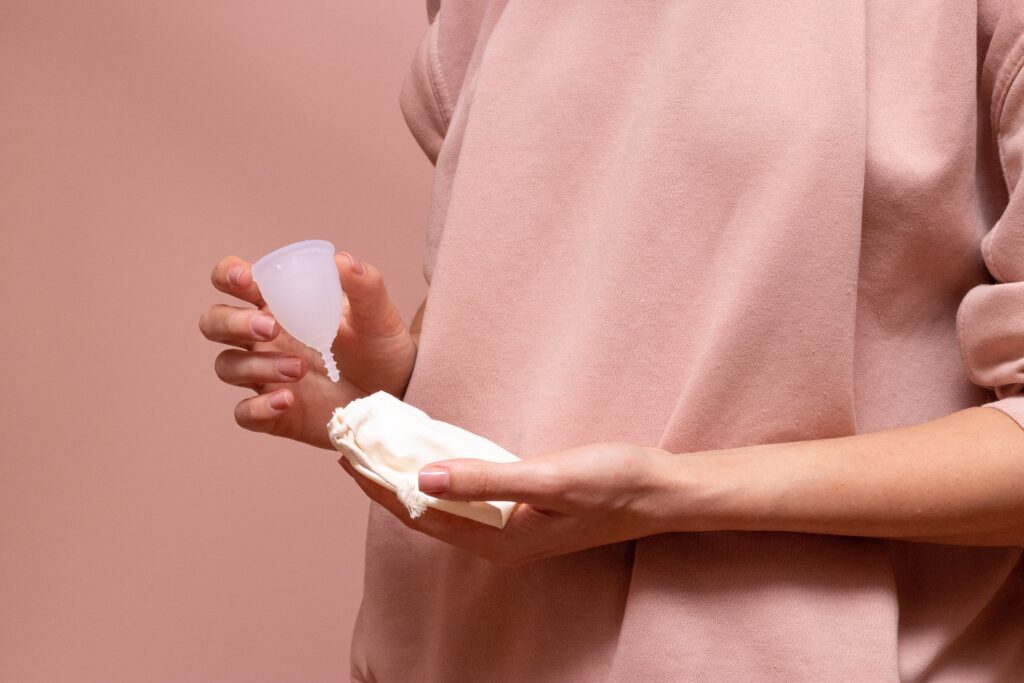
Speaking of bettering the condition of our planet, I’d advise that you consider getting rid of your tampons and use a menstrual cup as I have been implying throughout my post.
No woman is like another. Our comfort levels, our shape, and our flows differ greatly from one to another. Needless to say, the menstrual cup that works for me may not be the one that works for you.
The best thing you can do is a trial and error with different products and brands to see what works for you.
If you are ready to take the plunge into going all natural when it comes to your period, there are few things to consider before purchasing.
1 – How old are you?
2 – Have you had children?
3 – How many days is your flow?
4 – Do you have any medical concerns or diagnoses?
5 – Do you have vaginal insertion pain?
6 – What kind of underwear do you prefer to wear?
7 – When and how long are your heaviest flow days?
8 – Have you experienced toxic shock syndrome?
9 – Are you allergic to disposable sanitary products?
10 – How accessible are you to a bathroom while at work?
Asking yourself these questions will help you get to know your body and your period well enough to determine what kind of products will be best for you to use.
If you are going to invest in a menstrual cup, start by taking the Menstrual Cup Quiz to help you pick out the one that will work best for you.
Menstrual cups can be daunting at first. I’d say that it takes about 2-3 cycles before you get your system down and are fully comfortable with it. But do not give up because once you learn, you’ll be glad that you did!
Once it is in, you won’t even feel it. And leaking is minimal. But on those heavy flow days, pairing your cup with a cloth pad is an unbeatable combination. You will be using all sustainable and reusable products that have no harsh chemicals or toxins.
Try different brands and sizes and figure out what works best for you, but here is a list of my favorite menstrual cup brands HERE.
I’ve also included cloth pads, vitamins, and other essentials to help make your period work for you, not against you.
I can’t find cloth pads in your shop. When do you restock?
I restock my shop once a month. The stocking day will be announced in many different areas including social media, email, and on my website itself, but it’s always on a Friday at 1pm CST.
Feel free to sign up to receive emails from the shop so you can stay up to date on everything regarding new products, stocking dates, new blog posts, etc. When you sign up, you will get a coupon code to use at your next shopping trip.
When the store is restocked, most items sell out that day. Be sure you are ready on that day and time of stocking. You will receive the complete instructions on how to make sure you grab what you want from my shop via email when you sign up.
Why do I only stock my store once a month?
I am a one-woman show in my sewing studio, and I’m a momma of 4 kiddos! It takes me a couple of weeks to sew everything, a week to set it all up in the shop, and a week to ship.
So in the meantime, I have set up my Amazon shop for you to purchase all period products any time while you wait on the custom ones to be made. You can find that shop HERE.
In conclusion
So with all of that said, I couldn’t be happier that I made the switch! Not only do they make my periods more bearable in so many ways, they are bettering our planet!
And what if all women jumped on board? We would be supporting small businesses who actually care about the wellbeing of women instead of the large corporations who pump their products full of toxins and chemicals and who (quite frankly) don’t give a damn about our vaginas! Switching to cloth pads will surely make you as happy as it has made me.
**And one more practical suggestion about periods from one woman to another: download a period tracker app. If you are like me, you forget what day you started your last period. It’s helpful to know when to stock up on ice cream and chocolate, right? Plus, I know some of you have abnormal periods. When seeing your gynecologist, it is immensely helpful to know your period pattern.
Be sure to click the “pin it” button on the images below. Save it for later on your pinterest board so you can come back and revisit the valuable information you read here on the SoCo Blog. When you pin this on pinterest, you are also sharing it even further for other women to potentially find it and help her get this awesome info as well. Just hover over the photo below until the “pin” button pops up, click on that button and it will take you straight to your pinterest account where you can save this blog post to your boards.


